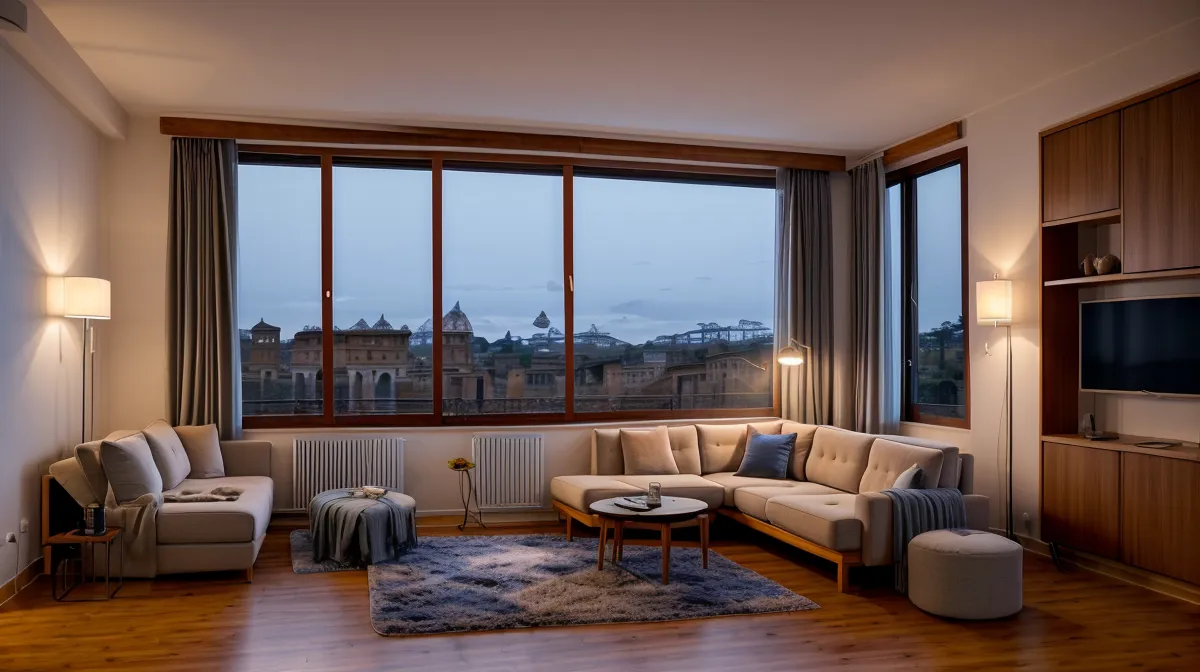
One humid Friday evening in Roma Norte, my partner and I settled in for what was supposed to be a low-stakes movie night, only to find our favorite British crime drama missing from the local Netflix library. It had been replaced by a cold, clinical 'not available in your region' notice that felt like a personal snub. We’d just spent twenty minutes debating which brand of mezcal went best with popcorn, only to be thwarted by a licensing agreement signed in a boardroom thousands of miles away.
Before we go any further, just a quick heads-up: this site uses affiliate links. If you sign up for a VPN through these links, I earn a commission at no extra cost to you. I’m only recommending services like Surfshark because I’ve actually paid for them and spent far too many hours troubleshooting them in various Airbnbs across three continents. Full transparency is my policy here, mostly because I know how annoying it is when things just don’t work.
The Altitude, the Apps, and the 'Partner Conflict'
Living in Mexico City is a dream, but at 2,240 meters above sea level, even the internet seems to get a bit breathless sometimes. My partner works as a consultant and often has late-night client calls with people in London or New York. This creates what I call 'The Partner Conflict': one person needs a rock-solid, secure line for a professional video call, while the other just wants to trick Netflix into thinking we’re sitting in a flat in Dalston so we can finish the final season of that detective show where everyone wears chunky knitwear and looks miserable.
The problem is that most basic VPNs or proxy extensions are a bit like a cheap travel adapter—they work until you actually try to plug something heavy into them. When we first arrived in Mexico City in early spring 2026, we were using a basic setup that would constantly drop. Every time my partner started a Zoom call, the VPN would freak out, the Netflix stream would buffer, and I’d be left staring at a spinning circle while the protagonist was about to reveal the killer. Netflix is surprisingly clever at spotting when you’re using a VPN; they use IP address geolocation to check if your 'house' is actually a data center in Slough.
I realized we needed something more robust. While a premium VPN service like ExpressVPN offers incredible connection stability—which is vital for group streaming—it does require a bit more manual configuration than those 'one-click' browser extensions. But that’s the trade-off: you spend five minutes getting the settings right so you don’t spend the next two hours shouting 'Is it working now?' from the kitchen.
Putting the 'Unlimited' Claim to the Test
Late last June, after a particularly frustrating week of our old VPN failing every time we switched from the living room Wi-Fi to the bedroom signal, I decided to go all-in on Surfshark. They make a big deal about having unlimited simultaneous device connections, and honestly, I thought it was marketing fluff. But being a tech-heavy couple on the move, we are the ultimate stress test. Between our two phones, two laptops, the temperamental smart TV, and my tablet, we easily surpass the 8 simultaneous device connections you get with something like ExpressVPN.
We did a 'stress test' one rainy Saturday. We had the TV streaming a UK documentary in HD, my partner was on a test call on his laptop, and I was scrolling through design portfolios on my tablet. Typically, the Netflix Standard plan only allows for 2 simultaneous screens anyway, but the VPN usually becomes the bottleneck before the Netflix plan does. To my genuine surprise, the connection held. No buffering, no 'VPN detected' errors, and no grumpy glares from across the sofa. If you're traveling with a crowd or just have too many gadgets, it's worth reading more about why Surfshark is the best VPN for travel with multiple devices.

The 'Bypass' Mode: A Small Feature for Big Headaches
After about three weeks of testing our new setup, I stumbled across the feature that actually saved my sanity in Mexico City: Bypass mode (or split tunneling, if you want to be technical about it). In the past, I’d have to turn the VPN off every time I wanted to check my local Mexican bank account or order food through a local app, because those apps would see a London IP address and immediately lock my account for 'suspicious activity'.
With Surfshark, I could set the banking and food apps to 'bypass' the VPN tunnel. This meant the smart TV stayed firmly 'in London' for our movie nights, while my phone stayed in Mexico City for everyday life. It sounds like a small thing, but when you're living somewhere for months, the constant toggling of a VPN switch becomes a genuine chore. I’ve written a bit more about this specific struggle in my guide on how I use VPN split tunneling for streaming while working.
I’ve noticed that while Surfshark is brilliant for this, the streaming reliability can be slightly less consistent than the absolute top-tier providers. Every once in a while—maybe once every ten days—I’ll get the dreaded proxy error. Usually, a quick server swap (moving from 'London' to 'Manchester', for example) fixes it in seconds, but it’s that tiny bit of manual faff that you have to accept in exchange for the device flexibility.
Comparing the Contenders for CDMX Living
While Surfshark has become our daily driver, it wasn't the only one we considered. When you're trying to figure out the best VPN for Apple TV to watch British content from Mexico, you realize every service has a slightly different 'personality.' For instance, NordVPN has these specialty servers labeled specifically for streaming, which is great when you're in a rush. CyberGhost VPN, on the other hand, is incredibly beginner-friendly because it literally tells you 'this server is for Netflix UK'. Plus, their 45-day money-back guarantee is the longest I've seen, which is great if you're only in town for a month and want to test the waters.
Then there's Private Internet Access, which is the one I use when I’m feeling particularly paranoid about privacy, though it can be a bit hit-or-miss with unblocking Netflix compared to the others. It’s all about what you prioritize. Do you want the polished, high-end experience of ExpressVPN, or do you need the 'connect everything at once' freedom of Surfshark?
Stabilizing the Routine by Mid-September
By mid-September, our Mexico City routine had finally stabilized. We stopped fighting over the bandwidth and started actually enjoying our Friday nights again. We’ve learned that the secret to a successful 'shared movie night' abroad isn't just about the speed of the internet—it's about the reliability of the 'handshake' between your VPN and the streaming service’s servers.
Streaming protocols like WireGuard have made a massive difference. They handle the transition between the spotty Airbnb Wi-Fi and the VPN server much more gracefully than the old tech used to. It means when the power flickers during a CDMX thunderstorm (as it often does), the VPN reconnects almost instantly, and we don't have to restart the whole movie.
If you're currently staring at a 'content not available' screen in your own apartment, I’d suggest giving Surfshark a go. It’s not perfect—no tech is—but for a couple who refuses to give up their British telly while living at the foot of the Sierra Madre, it’s been the most practical solution we’ve found. We’ve even managed to get streaming to work perfectly while one of us is on a high-stakes Zoom call, which is basically the nomad version of a miracle. Just remember to check the latest pricing on their site, as these things change faster than the weather in the valley.
Living abroad is about embracing the local culture, yes, but sometimes, after a long day of navigating a foreign city in a foreign language, you just want to sit on a sofa in Roma Norte and hear a familiar British accent solve a crime. And thanks to a few clever bits of software, we can do exactly that.